
Noticing a new adult tooth emerging behind your child’s baby tooth can be surprising. It may look like a second row of teeth, often called ‘shark teeth.’ This is more common than most parents think, and with the right care, it can be corrected easily.
Understanding what’s happening helps you make the best decision for your child’s smile.
What It Means When a Tooth Grows Behind a Baby Tooth
When a permanent tooth grows in behind a baby tooth, it means the new tooth started erupting before the baby tooth had time to fall out. The baby and adult tooth end up sharing the same space, one in front of the other.
Dentists call this ectopic eruption, but parents often say the tooth is growing behind the baby tooth. It usually appears in the lower front teeth between ages 5 and 7, but it can also happen in the upper front.
Causes of a Tooth Growing Behind a Baby Tooth

Common causes include:
- The baby tooth’s root didn’t dissolve completely. Permanent teeth normally break down the roots of baby teeth so they can fall out. If that doesn’t happen, the baby tooth stays firm.
- Crowding or a small jaw. Limited space can push the new tooth to erupt slightly behind.
- Early eruption. Some adult teeth come in sooner than expected.
- Angled eruption path. The permanent tooth may grow at a slight tilt.
- Natural variation. Every child’s eruption pattern is unique.
How to Recognize It
Look for:
- Two visible rows of teeth
- A baby tooth that won’t loosen, even with a new tooth behind it
- The new tooth is sitting slightly inward or backward
- Mild pressure or discomfort
- No change after several weeks
If you notice these signs, keep an eye on them for a few weeks. Many cases correct themselves once the baby tooth falls out.
What to Do When a Tooth Is Growing Behind a Baby Tooth (At Home)
Here’s what parents can do at home:
- Encourage gentle wiggling. Let your child loosen the tooth slowly with clean hands or their tongue.
- Keep brushing and flossing. Clean around both teeth to prevent trapped food or gum irritation.
- Be patient. Often, the tooth falls out naturally within a few weeks.
- Monitor the situation closely. If nothing changes after four to eight weeks, schedule a dental visit.
Avoid pulling the tooth yourself. Early removal can cause bleeding or infection.
When to See a Pediatric Dentist?
Book a visit if:
- The baby tooth remains tight after several weeks
- The permanent tooth keeps rising behind it
- Your child feels pain or swelling
- Teeth appear crooked or crowded
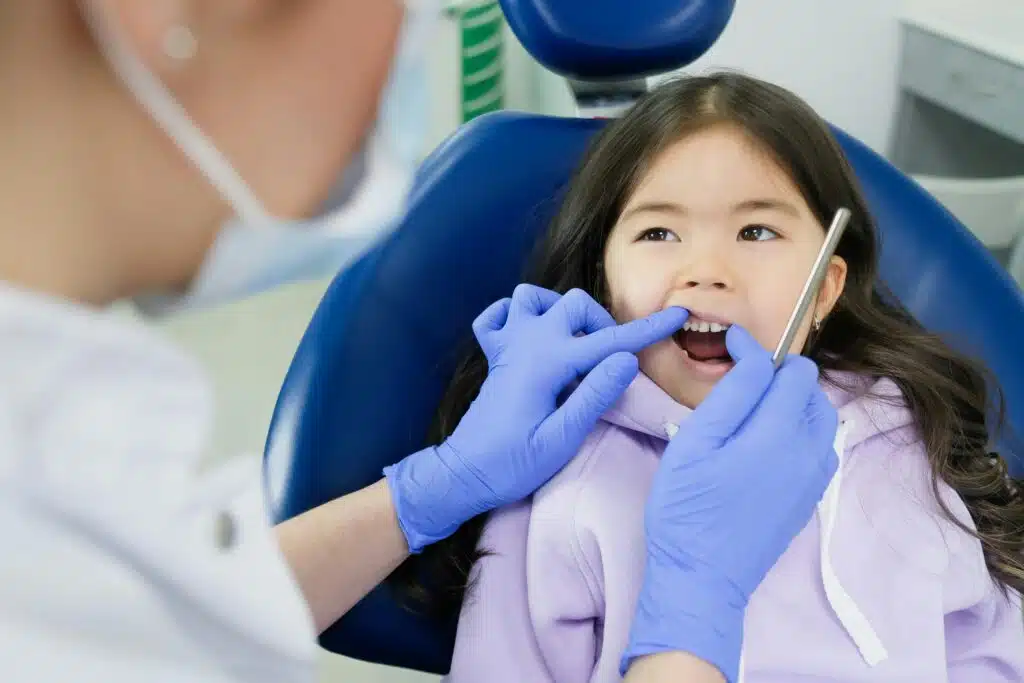
The pediatric dentist will examine the area, take an X-ray, and decide whether to remove the baby tooth. In many cases, a simple extraction lets the permanent tooth slide forward naturally.
What Happens After the Baby Tooth Is Removed
Once the baby tooth is out, the permanent tooth growing behind baby tooth usually moves into the correct spot within a few months. Gum tissue adjusts, and the smile begins to even out.
If there’s not enough space, the dentist may suggest an early orthodontic evaluation to keep eruption on track.
Why You Shouldn’t Wait Too Long
Delaying care can:
- Cause crooked or overlapping teeth
- Make brushing and flossing difficult
- Lead to plaque buildup and decay
- Create future orthodontic problems
An early checkup keeps treatment simple and comfortable.
Tips for Parents
- Schedule dental visits every six months to catch spacing issues early.
- Compare both sides. If one baby tooth falls out and the other doesn’t within a few months, mention it at your child’s next check.
- Offer age-appropriate crunchy snacks (like soft apple slices or lightly steamed carrots) to encourage natural loosening.
- Use mouthguards for sports to avoid tooth trauma.
- Ask about interceptive orthodontics to guide eruption and reduce future braces time.
FAQs About Tooth Growing Behind Baby Tooth
1. Will the permanent tooth move forward on its own?
Usually yes. Once the baby tooth falls out, the permanent tooth often shifts into place naturally.
2. Should the baby tooth be pulled at home?
No. Pulling too early can cause pain or bleeding. Let a pediatric dentist decide when it’s ready.
3. How long should parents wait before seeing a dentist?
If the baby tooth hasn’t loosened after four to eight weeks, or the permanent tooth keeps rising behind it, book an appointment.
4. Can this affect braces later?
Untreated crowding can influence future orthodontic treatment. Early monitoring keeps alignment on track.
5. What if several teeth are growing in behind baby teeth?
Multiple cases can mean spacing or eruption problems. An orthodontic evaluation can guide proper growth.
Worried About a Tooth Growing Behind Your Child’s Baby Tooth? Let’s Fix It Together
Seeing a permanent tooth growing behind a baby tooth can make any parent uneasy. It may look alarming, but it’s usually easy to correct when addressed early. Acting quickly prevents crowding, misalignment, and stress.
At PCO Dental & Orthodontics, our pediatric and orthodontic specialists know what every growing smile needs. We make visits positive, gentle, and informative so kids feel comfortable and parents feel confident.
If you’ve noticed a tooth growing behind a baby tooth, let’s take care of it together.
Schedule your child’s visit today at PCO Dental & Orthodontics NY and keep their growing smile healthy, straight, and strong.