

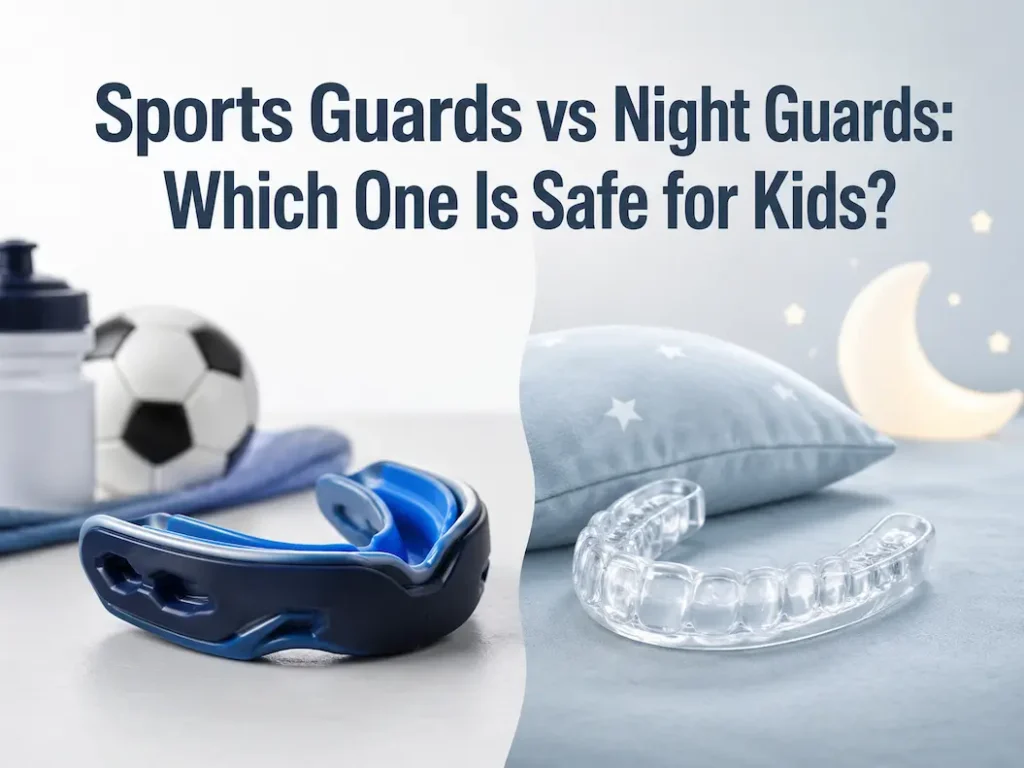
Most mouthguards look similar but perform different jobs. Comparing sports guards vs night guards matters because one cushions sudden hits, while the other limits tooth damage during sleep.
Using the wrong guard can leave your child underprotected. Kids teeth grinding can slowly wear down tooth surfaces, while an unsuitable sports guard may fail to cushion the mouth during a sudden impact. Here is how to choose for sports, nighttime grinding, braces, and a growing smile.
Sports Guards vs Night Guards For Kids
Here is the difference at a glance:
| Feature | Sports Guard | Night Guard |
|---|---|---|
| Main Job | Cushions sudden impact | Protects teeth during grinding |
| When Worn | Sports and active play | Sleep |
| Typical Design | Thicker and shock-absorbing | Shaped for longer wear |
| Main Risk Addressed | Falls, balls, elbows, and collisions | Repeated pressure and rubbing |
| Can Replace the Other? | No | No |
A sports guard must stay secure while a child runs and breathes. A night guard must remain comfortable for hours. The same guard should not move between the field and bedroom.
Sports Guards Protect Active Smiles
A sports guard spreads the force of a blow and helps protect the mouth. Football, basketball, soccer, hockey, martial arts, gymnastics, skating, and biking can all place a child’s smile at risk.
The American Dental Association’s mouthguard guidance describes custom, boil-and-bite, and stock options. A suitable guard should fit securely without making breathing or speaking difficult.
Sports Activities That Need Protection
Consider falls, hard surfaces, flying objects, and collisions. A gymnast may not tackle another player, but a missed landing can still injure the mouth.
Night Guards Protect Grinding Teeth
A night guard protects teeth during repeated contact in sleep. Pediatric bruxism is the dental term for repeated teeth grinding in children, which parents may notice through scraping sounds, worn teeth, or morning jaw soreness.
When kids’ teeth grinding happens often, parents may notice worn edges, chips, sensitivity, jaw tiredness, or morning discomfort.
It creates a barrier between the teeth but may not stop the grinding itself. A dental mouth guard for kids should be chosen after the child’s bite and growth stage are checked.
Signs Your Child Grinds At Night
Listen for scraping sounds during sleep. Also watch for flattened tooth edges, morning soreness, sensitivity, or discomfort while chewing. These signs justify dental checkups and cleanings.
Wrong Guards Give Wrong Protection
Not every mouthguard suits every situation. A product made for the wrong force may feel protective while failing to do the needed job.
Sports Guards During Sleep
A sports guard may be too bulky overnight. Some stock guards require biting to stay in place. A loose guard may rub, fall out, or fit poorly as teeth change.
Do not use one as a quick fix for nighttime grinding, especially when teeth are changing or braces are moving them.
Night Guards During Sports
A night guard cannot cushion a fast ball, fall, elbow, or collision like a sports guard. It could also be damaged by impact and should never be treated as sports protection.
Growing Smiles Change Guard Fit
Baby teeth fall out, permanent teeth arrive, and a child’s bite shifts during growth. A guard that fit several months ago may become tight, loose, or uneven.
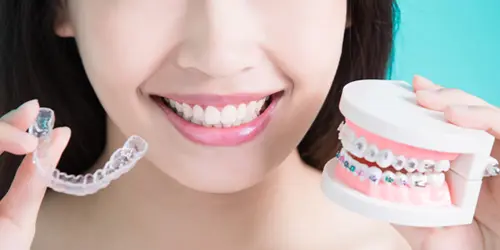
Braces require extra care. A sports guard must leave room for tooth movement and protect the lips from brackets. Children receiving braces treatment need a braces-friendly design and regular fit checks.
Stop using a guard if it causes pain, falls out, develops sharp edges, or no longer seats fully.
Custom Sports Mouthguards Or Store-Bought?
Price matters, but fit, comfort, protection, and whether your child will wear the guard matter more.
Stock Sports Guards
Stock guards are inexpensive and ready to wear, but limited sizing may make them loose or bulky. Some children must clench to keep them in place.
Boil-And-Bite Sports Guards
These soften in hot water and are shaped around the teeth. They can fit better than stock guards, but poor molding may create thin spots or an uneven fit.
Custom Sports Mouthguards
A custom sports mouthguard is shaped for your child’s mouth and can improve stability, comfort, speaking, and breathing. It still needs checks as teeth grow or braces move them. The ADA notes that custom guards provide an individualized fit.
Kids Who May Need Two Mouthguards
A child who plays basketball and grinds their teeth at night may need two guards: one for practices and games, and another for sleep.
Use this rule:
- Impact risk means a sports guard.
- Nighttime grinding means a dental evaluation.
- Both situations may require two separate guards.
For braces, loose teeth, or a changing bite, ask a dentist or orthodontist before buying either product.
Mouthguard Care And Replacement
Rinse the guard with cool water, clean it gently, and let it dry before placing it in a ventilated case. Keep it away from heat because high temperatures can change its shape.
Check for cracks, rough edges, chewing damage, odor, and poor fit. Replace it when damaged, tight, loose, or uncomfortable. Bring it to preventive dental visits for fit checks.
Pediatric Dentist Mouthguard Fit Checks
Arrange a visit when grinding is frequent, teeth look worn, the jaw feels sore, or a guard causes discomfort. Children with braces, loose teeth, new permanent teeth, or a guard that keeps falling out also need a fit check.
Through pediatric dentistry, parents can receive guidance based on age, tooth development, sports, and current dental needs.
Choosing The Right Mouthguard For Your Child
Sports guards protect against sudden impact. Night guards protect teeth from repeated grinding during sleep. They are not interchangeable.
Choose the guard for its job, check the fit regularly, and act when you notice soreness, slipping, or damage. A professional evaluation can protect your child during sports and sleep without interfering with a changing smile.
Why Choose PCO Pediatric Dentistry & Orthodontics?
PCO Pediatric Dentistry & Orthodontics provides coordinated dental and orthodontic care for growing smiles. Our team evaluates grinding, sports risks, braces, tooth development, and mouthguard fit in one place. Families receive clear recommendations, practical prevention guidance, and age-appropriate care designed around each child’s comfort, activities, and changing needs at every visit.
Frequently Asked Questions
Can A Child Sleep With A Sports Mouthguard?
A sports mouthguard should not replace a night guard. Its bulky design may feel uncomfortable for hours, require biting to stay secure, or fit poorly as teeth change. Ask a dentist about an option made specifically for sleep.
Can A Night Guard Be Used For Football Or Basketball?
No. A night guard handles repeated tooth pressure during sleep, not sudden hits from falls, balls, or other players. Children in football, basketball, or similar activities need a properly fitted sports mouthguard.
Should Every Child Who Grinds Their Teeth Wear A Night Guard?
Not always. Occasional grinding may not require a guard, particularly while teeth are changing. A dentist should assess tooth wear, discomfort, bite, age, and growth before recommending a nighttime dental guard.
Can Children With Braces Wear A Sports Mouthguard?
Yes, but they need a braces-friendly guard with space for tooth movement and coverage around brackets. Have the fit checked after adjustments, especially if the guard becomes tight, loose, painful, or difficult to place.
How Do I Know When My Child’s Mouthguard No Longer Fits?
Have it checked if it falls out, feels painfully tight, will not seat fully, rubs the gums, develops cracks, or makes breathing difficult. Growing teeth and braces can change a child’s mouthguard fit quickly.