Pediatric Restorative Dentistry in Queens, NY
Repair decay, protect injured teeth, and restore your child’s everyday comfort with care designed for developing smiles. PCO Pediatric Dentistry & Orthodontics provides restorative dental care for children with cavities, infections, fractures, or premature tooth loss. Dr. Sara plans each procedure after reviewing the affected tooth, symptoms, growth stage, and comfort needs. Families receive clear information about suitable options, including fillings, crowns, pulp therapy, extractions, and space maintainers.
What Is Pediatric Restorative Dentistry?
Pediatric restorative dentistry repairs or protects baby and permanent teeth affected by dental caries, injury, infection, or structural damage. Treatment may preserve healthy tissue, improve chewing, control disease, and support continued oral development. A small cavity may require a tooth-colored filling. Extensive damage could need a dental crown. When decay reaches the dental pulp, Dr. Sara may consider a pulpotomy or pulpectomy.
A tooth that cannot be restored reliably might require extraction. Recommendations depend on the examination, symptoms, digital X-rays when needed, cavity depth, remaining tooth structure, pulp health, root condition, and expected eruption timing. Your child’s medical history, age, anxiety, and ability to participate are also considered.
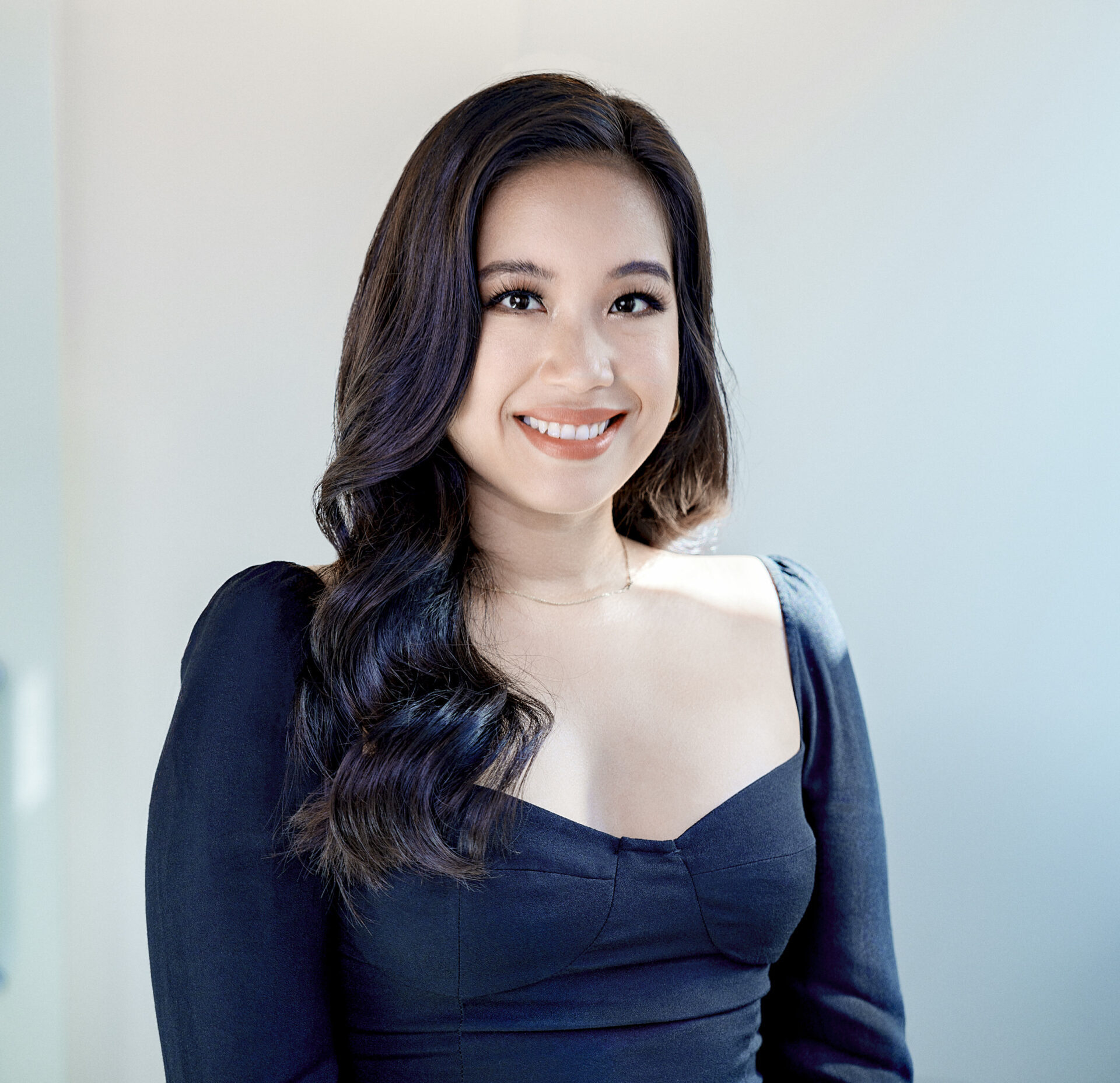
Meet Dr. Sara
Board-Certified Pediatric Dentist
Meet Your Board-Certified Pediatric Dentist, Dr. Sara Rasamimari
Dr. Sarunphorn “Sara” Rasamimari is board-certified by the American Board of Pediatric Dentistry. She earned her Bachelor of Science in Public Health with a minor in Psychology from Indiana University, received her DMD from Midwestern University, and completed her pediatric dental residency at NYU. Her advanced training helps her diagnose tooth decay, dental trauma, pulp conditions, and problems affecting developing smiles.
Dr. Sara considers both the immediate concern and how each option could influence chewing, spacing, and permanent tooth eruption. As a member of the American Academy of Pediatric Dentistry and the American Dental Association, she follows current professional guidance when planning care. Parents receive understandable explanations before making decisions about their child’s treatment.
Why Queens Families Choose PCO for Restorative Dental Care
Our approach combines pediatric expertise, careful treatment planning, child-friendly communication, and honest guidance for parents.
Board-Certified Expertise
Dr. Sara combines pediatric residency training with board certification to assess decay, dental injuries, and pulp health while planning care for growing teeth.
Individual Treatment Planning
Each recommendation reflects cavity depth, remaining tooth structure, eruption timing, medical history, and a child’s comfort needs identified during the visit.
Child-Centered Communication
We explain unfamiliar steps with age-appropriate words, introduce instruments gradually, and adjust the pace to help children take part with greater confidence.
Clear Guidance for Parents
Parents receive a clear review of findings, suitable options, likely aftercare, and follow-up needs before agreeing to their child’s restorative treatment plan.
Board-Certified Pediatric Dentist
Dr. Sara is a board-certified pediatric dentist with advanced training in caring for infants, children, and teens.
Board-Certified Pediatric Dentist
Dr. Sara is a board-certified pediatric dentist with advanced training in caring for infants, children, and teens.
Board-Certified Pediatric Dentist
Dr. Sara is a board-certified pediatric dentist with advanced training in caring for infants, children, and teens.
Board-Certified Pediatric Dentist
Dr. Sara is a board-certified pediatric dentist with advanced training in caring for infants, children, and teens.
Our Pediatric Restorative Dental Services
These options address different levels of decay, injury, infection, and premature tooth loss. A listed procedure is not automatically appropriate for every child.

Pediatric Dental Fillings
Tooth-colored composite fillings repair small to moderate cavities after damaged enamel and dentin are removed. They restore the tooth’s shape.
Pulpotomy
A pulpotomy removes affected pulp from the crown portion of a baby tooth while healthy tissue remains inside the roots. A crown is often placed afterward for added protection.
Pediatric Dental Crowns
A pediatric crown covers a tooth weakened by extensive decay, a fracture, or pulp therapy. The selected restoration protects the remaining structure and restores its function.
Benefits of Restorative Dentistry for Children
Preserves Important Teeth
Restoring decay or damage can help a child chew comfortably, protect nearby tissues, and keep a suitable baby tooth working until it is ready to fall out.
Protects Oral Development
Treating an infected or damaged tooth can reduce further breakdown and support the gums, jaw, and neighboring teeth throughout a child’s oral development.
Supports Permanent Tooth Eruption
Space preservation and early repair help guide the eruption of permanent teeth, maintain daily function, and reduce the chance of more complex care later.
What to Expect During Restorative Treatment
Every appointment is planned around the dental concern, your child’s health, and the amount of support needed to complete care.
Examination and Digital Imaging
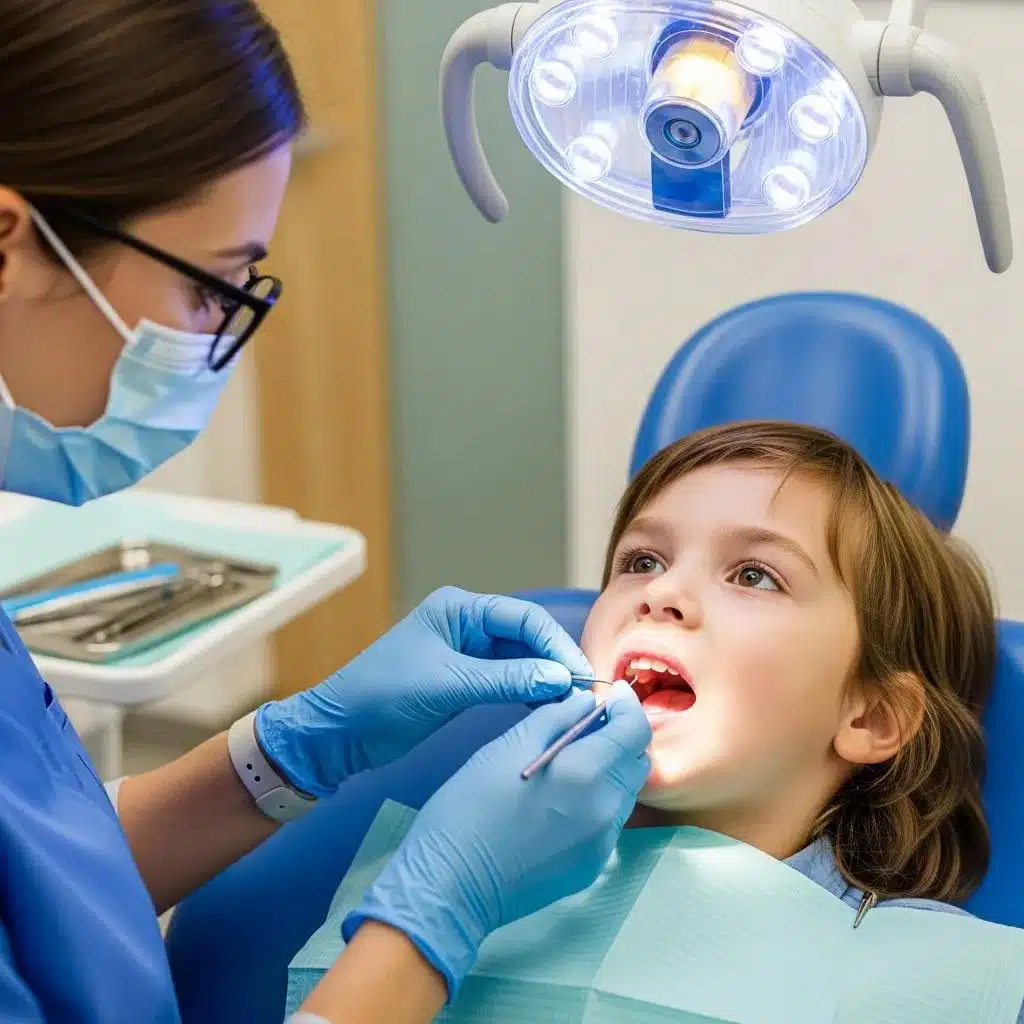
Dr. Sara reviews symptoms, medical history, prior dental care, and comfort needs. She checks the tooth and may recommend digital X-rays for details not visible.
Personalized Treatment Selection
Findings such as cavity depth, pulp health, remaining structure, root changes, and eruption timing help determine which treatment options fit the child’s needs.
Child-Focused Dental Care
We explain all planned care stages before treatment. Local anesthesia, behavior guidance, or a reviewed sedation option may be used when clinically appropriate.
Aftercare and Monitoring
Parents receive instructions about eating, cleaning, discomfort, and warning signs. Follow-up checks allow us to monitor healing, function, and the restoration.
Frequently Asked Questions About Pediatric Restorative Dentistry
Why treat a decayed baby tooth if it will eventually fall out?
Baby teeth support chewing, speech, jaw development, and spacing for permanent teeth. Untreated decay may cause discomfort, infection, or premature tooth loss. Whether a primary tooth should be repaired depends on its condition, expected lifespan, and ability to be restored.
How do you choose between a filling, crown, pulp treatment, and extraction?
A filling may repair limited decay when enough healthy structure remains. A crown can protect a weakened tooth, while pulp therapy may be considered when the inner tissue is affected. Extraction is generally reserved for teeth that cannot be restored reliably or may create further problems.
What is the difference between a pulpotomy and a pulpectomy?
A pulpotomy removes affected pulp from the upper chamber while suitable tissue remains inside the roots. A pulpectomy removes pulp from both the crown and root canals when the tissue is infected or nonvital. The examination and digital images help determine which approach may be appropriate.
Will my child need sedation for restorative treatment?
Not every patient requires sedation. Many procedures can be completed with local anesthesia, clear explanations, and behavior guidance. Sedation may be discussed for significant anxiety, young age, special healthcare needs, limited cooperation, or extensive treatment.
What should I expect after a filling, crown, or pulp procedure?
Temporary numbness, mild sensitivity, or gum tenderness may occur. Parents receive instructions about eating, cleaning, medication, and activity. Contact the office if your child develops increasing pain, facial swelling, fever, ongoing bleeding, or a loose restoration.
Convenient Restorative Dental Care for Children in Queens, NY
PCO Pediatric Dentistry & Orthodontics is located at 34-22 35th Street, Queens, NY 11106. We welcome families from Astoria, Long Island City, and surrounding Queens communities seeking care for decayed, infected, broken, or missing teeth. Parents may contact us after noticing a cavity, tooth sensitivity, swelling, a chipped tooth, or a lost filling or crown.
We also provide evaluations when another dental professional has recommended restorative treatment and the family wants to understand the available options. Dr. Sara explains the diagnosis, why treatment may be needed, and how each choice could affect your child’s oral health. Call (718) 223-5652 or schedule online to arrange a restorative dental evaluation at our Queens office.