Your child’s upper teeth may sit inside the lower teeth, new teeth may have little room, or the jaw may slide sideways before the bite closes. Are these normal changes or signs of a problem?
The signs your child needs a palate expander are not always obvious, and one clue cannot confirm treatment. Here are five signs to watch for, what they may mean, and when an orthodontic check can provide an answer.
What Does a Palate Expander Fix?
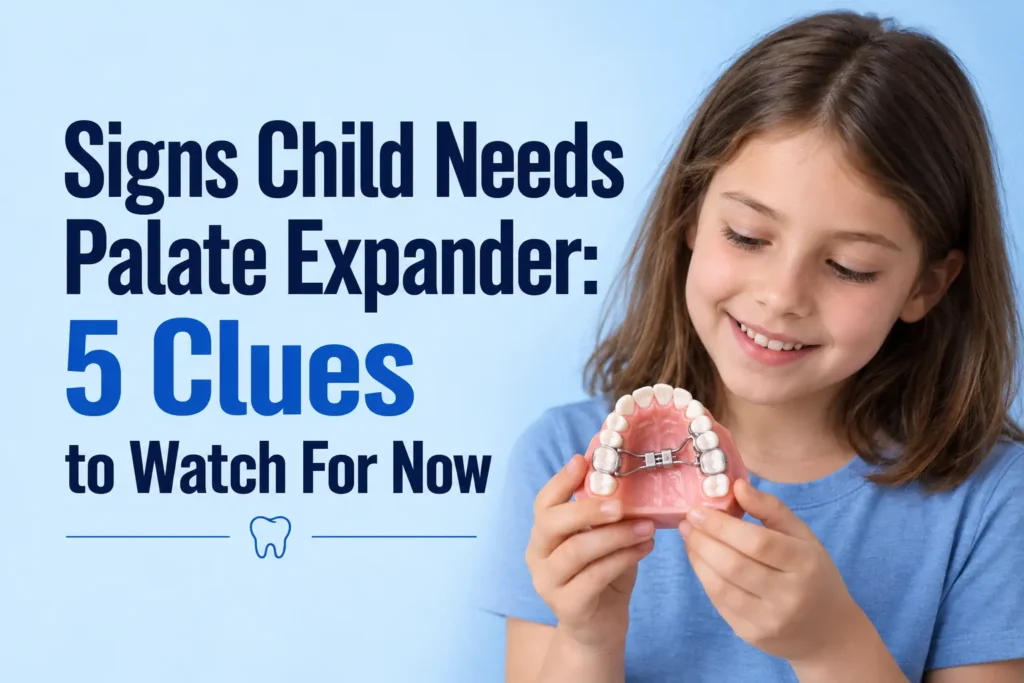
A palate expander is a small orthodontic device that gradually widens a narrow upper jaw. The added width may help the upper and lower teeth meet more evenly and create room for permanent teeth.
An expander changes jaw width, while braces for children guide teeth into better positions. Some children need both treatments. Others need only one or careful monitoring.
Signs Your Child May Need a Palate Expander
1. Crossbite: Upper Teeth Sit Inside
Normally, the upper back teeth sit slightly outside the lower teeth. In a crossbite, one or more upper teeth close inside them. It may affect one side or both sides.
The child may shift the jaw before biting or chew mostly on one side. Crossbite correction in children may include an expander when the upper jaw is too narrow. If only a few teeth are misplaced, braces or another option may work better.
2. Crowding: New Teeth Lack Space
Overlapping teeth, adult teeth growing behind baby teeth, or teeth appearing high in the gums can suggest limited space. Crowded baby teeth alone do not prove an expander is needed.
Parents searching for crowded baby teeth solutions should begin with an evaluation. The orthodontist checks whether crowding comes from jaw width, tooth position, or normal tooth changes. Routine dental checkups and cleanings also help track incoming permanent teeth.
3. Narrow Smile: Upper Teeth Look Pinched
A wider upper row of teeth usually looks rounded. A narrow row may appear pointed or V-shaped, with the sides of the smile pinched inward. The roof of the mouth may also look high.
Parents often search for pediatric narrow palate symptoms, but appearance cannot confirm the cause. Family features, tooth position, and growth can affect smile shape. An evaluation shows whether the upper jaw truly needs more width.
4. Jaw Shift: The Bite Moves Sideways
Ask your child to close naturally. If the lower jaw slides left or right before the teeth meet, the bite may not fit evenly.
Other clues include chewing on one side, an off-center chin while biting, or teeth that touch sooner on one side. Parents searching for jaw alignment kids guidance should know that a shift may come from tooth contact, jaw width, or both.
5. Mouth Breathing: It Keeps Happening
Regular mouth breathing, open-mouth sleeping, or snoring may appear alongside a narrow upper jaw. These signs can also be related to allergies, enlarged tonsils, or a blocked nose.
An expander is not a guaranteed breathing treatment. Discuss repeated breathing or sleep concerns with the orthodontist and your child’s healthcare provider so each possible cause can be checked.
Does One Palate Expander Sign Confirm Treatment?
No. An orthodontist considers the complete pattern, including:
- How the upper and lower teeth meet
- Whether the jaw shifts while biting
- Space for incoming permanent teeth
- Your child’s age and growth
- Whether the problem is worsening
The recommendation may be an expander, braces, another early option, or monitoring. Reviewing orthodontic treatment types can help parents understand why similar-looking smiles may need different plans.
When Should a Child Get an Orthodontic Check?
The American Association of Orthodontists recommends a first orthodontic check by age seven. At this age, the mix of baby and permanent teeth can reveal developing bite and space concerns.
Age seven is a checkup milestone, not an automatic treatment age. Arrange an earlier visit for a clear crossbite, jaw shift, chewing trouble, or blocked incoming teeth. Older children can still benefit from an evaluation.
What Happens During an Orthodontic Check?
The orthodontist watches how your child closes the teeth, checks upper-jaw width, and looks at the space for incoming teeth. Photos or X-rays may be used when needed.
You should receive a clear explanation of whether treatment is needed now, later, or not at all. Ask why an expander is recommended, what alternatives exist, and whether braces may still be needed. Guidance about life with orthodontic treatment can also help your family prepare.
Palate Expander Signs: What Comes Next?
A crossbite, crowded incoming teeth, a narrow upper smile, a shifting jaw, or repeated mouth breathing deserves attention when it continues. None proves that your child needs a palate expander.
Schedule an orthodontic check when several clues appear together or your child’s dentist raises a concern. A proper evaluation replaces guessing with a plan based on your child’s bite, growth, and needs.
Why Choose PCO Pediatric Dentistry & Orthodontics?
PCO Pediatric Dentistry & Orthodontics provides coordinated dental and orthodontic care for children, teens, and families in Astoria and Queens. Our team evaluates developing teeth, bite concerns, jaw growth, and comfort needs. Parents receive clear explanations, personalized options, and practical guidance before deciding whether early orthodontic treatment is appropriate for them.
Palate Expander FAQs
Does Every Child With a Crossbite Need an Expander?
No. A single tooth may sometimes be guided without widening the upper jaw. An expander is more likely when several upper teeth bite inside the lower teeth or the jaw shifts. An orthodontic exam determines the right approach.
Can Crowded Baby Teeth Be Normal?
Some crowding can occur as a child loses baby teeth and permanent teeth begin to appear. Severe overlap, blocked teeth, or very little room should be checked. The cause matters because not every crowded smile needs expansion.
What Is the Best Age for a Palate Expander?
The best age depends on the bite problem and the child’s growth. Many children are checked around age seven, but treatment may start earlier or later. An evaluation should guide timing rather than age alone.
Can Braces Work Without a Palate Expander?
Yes, when the main concern is tooth position and the upper jaw has enough width. Braces move teeth, while an expander creates more jaw space. Some children need one treatment, and others need both in a planned order.
Will My Child Still Need Braces Later?
Possibly. An expander can improve jaw width and create room, but it may not place every tooth in its final position. Braces or clear aligners may still be recommended later, while some children only need follow-up checks.