
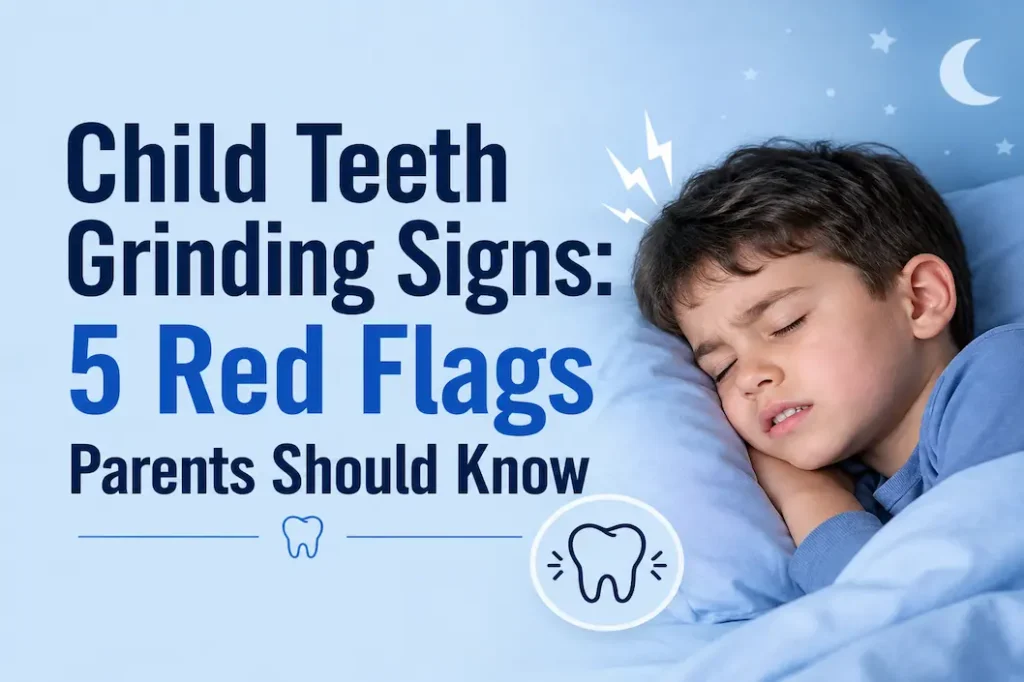
That harsh scraping sound from your child’s bedroom can be alarming. You may wonder whether it is a harmless sleep habit or a warning that their teeth are being damaged. Understanding child teeth grinding signs helps you look beyond the sound and notice changes in comfort, eating, sleep, and tooth shape.
Some children grind occasionally without lasting problems. Concern grows when it happens often or appears with pain, worn teeth, sensitivity, or disturbed sleep.
Is Childhood Teeth Grinding Always A Problem?
Not always. A child may grind during sleep without realizing it, and parents often notice the sound first. An occasional episode with no pain, eating difficulty, or tooth changes may simply need monitoring. Frequent grinding deserves attention when it grows louder, continues for weeks, or affects daily comfort.
Five Child Teeth Grinding Signs To Watch
Common pediatric bruxism symptoms include worn tooth edges, morning jaw soreness, headaches, tooth sensitivity, and changes in sleep.
Loud Nighttime Grinding Becomes Frequent
The first clue is often a scraping, clicking, or crunching sound after your child falls asleep. Toddler grinding teeth at night may happen for seconds or return several times during the night.
One noisy night is different from a pattern heard most nights. Note its frequency and duration. A short phone recording can help your dentist understand what you hear.
Worn Teeth Look Flat Or Uneven
Repeated pressure can make tooth edges appear flatter, shorter, uneven, chipped, or cracked. Parents searching for damaged tooth enamel kids may also notice that one tooth looks different from the matching tooth on the other side.
Check in good lighting and compare the teeth with an older photo if available. Visible changes should be checked during a children’s dental checkup and cleaning, even without pain.
Sensitive Teeth Change Eating Habits
A child may not say, “My tooth is sensitive.” Instead, they may pull away from cold water, refuse ice cream, avoid crunchy foods, chew on one side, or say brushing hurts.
Watch breakfast because discomfort may be easier to notice after nighttime grinding. Sensitivity has other possible causes, so a dentist should check for cavities or loose teeth. Regular preventive dental care can identify early wear.
Morning Jaw Pain Causes Discomfort
Jaw pain in children may appear as soreness near the cheeks, temples, or ears. Your child might rub their face after waking, struggle to open wide, complain that chewing breakfast hurts, or report a morning headache.
Ask, “Does your jaw feel tired?” or “Does it hurt when you bite?” Younger children may show discomfort through irritability or food refusal. Ongoing soreness or headaches deserve attention.
Restless Sleep Affects The Day
Grinding becomes more concerning when it appears with frequent waking, restless sleep, morning tiredness, irritability, or trouble focusing. Also notice loud snoring, open-mouth breathing, gasping, choking sounds, or pauses in breathing.
Grinding alone does not prove a breathing problem. Share those additional signs with your child’s dentist and pediatrician. The National Institute of Dental and Craniofacial Research also lists tooth wear, sensitivity, jaw soreness, headaches, and facial pain as warning signs.
Normal Grinding Or A Red Flag?
Occasional sound without discomfort can usually be monitored. A dental visit becomes more important when grinding happens most nights, grows louder, or comes with flattened teeth, chips, sensitivity, headaches, or chewing difficulty.
Baby teeth still support eating, speech, and space for future teeth. Adult teeth need especially close attention because lost tooth surface does not grow back. A pediatric dentistry visit can separate normal changes from damage that needs care.
What Parents Can Check Tonight
Listen for a few minutes after your child is asleep and note the date, duration, and sound. Do not wake or blame them because nighttime grinding is not a conscious choice.
In the morning, ask whether their jaw, face, or teeth feel sore. Notice whether they avoid cold drinks or firm foods. Look for flat edges, small chips, or a tooth that seems shorter. Take a clear photo and bring your notes or recording to the appointment.
When Should Parents Call A Dentist?
Schedule an evaluation when grinding is frequent, worsening, or linked with visible wear, tooth sensitivity, jaw pain in children, headaches, or difficulty chewing. Arrange care sooner for a broken tooth, severe pain, swelling, or a child who cannot eat comfortably.
Mention snoring, gasping, mouth breathing, or breathing pauses to the child’s pediatrician. Do not buy an adult or store-bought mouthguard without guidance. Children’s mouths are growing, so any protective option must fit safely and match their tooth development.
What Will The Dentist Check?
The dentist will examine tooth edges, biting surfaces, chips, cracks, sensitive areas, and how the upper and lower teeth meet. They may check jaw movement and ask about headaches, sleep, eating, stress, and recent changes.
Not every child needs treatment or a night guard. Advice depends on age, whether baby or adult teeth are affected, the amount of wear, and the child’s comfort. If tooth position or the bite may contribute, the team can explain whether monitoring or an orthodontic evaluation is appropriate.
Protect Your Child’s Teeth Early
The key child teeth grinding signs are frequent nighttime sounds, flattened or chipped teeth, food sensitivity, morning jaw discomfort, and changes in sleep or daytime behavior. Monitor occasional grinding, but schedule a dental visit when it worsens or causes pain, wear, or eating problems. Early evaluation can protect comfort and prevent avoidable damage.
Why Choose PCO Pediatric Dentistry & Orthodontics?
PCO Pediatric Dentistry & Orthodontics provides child-focused dental and orthodontic care in Queens, including Astoria and Long Island City. Our board-certified specialists carefully evaluate tooth wear, jaw comfort, bite development, and sleep-related concerns. Families receive clear explanations, personalized recommendations, and a supportive experience designed around each child’s needs at every visit.
Frequently Asked Questions
Is Teeth Grinding Normal In Toddlers?
Occasional grinding can occur as toddlers grow and adjust to new teeth. Contact a dentist if it happens most nights or comes with worn teeth, sensitivity, poor sleep, jaw soreness, headaches, or changes in eating.
Should I Wake My Child During Grinding?
Usually, no. Children do not grind on purpose, and waking them may interrupt needed sleep without stopping the pattern. Record how often it happens, check for morning discomfort, and share repeated episodes with a dentist.
Can Grinding Damage Baby Teeth?
Yes, frequent grinding can flatten, chip, or make baby teeth sensitive. Mild wear may only need monitoring, but pain, food avoidance, cracks, or rapid changes should be checked because baby teeth support eating and future tooth spacing.
Does Every Child Need A Night Guard?
No. Many children only need observation and regular dental checks. A dentist considers age, growth, tooth wear, pain, and whether adult teeth are present before recommending protection. Avoid store-bought guards unless advised.
Can A Child Grind Without Making Noise?
Yes. Silent clenching may still cause morning jaw tightness, headaches, sensitive teeth, or flattened edges. Look for changes in eating and comfort, and ask a dentist to check unexplained wear even when you hear nothing at night.