


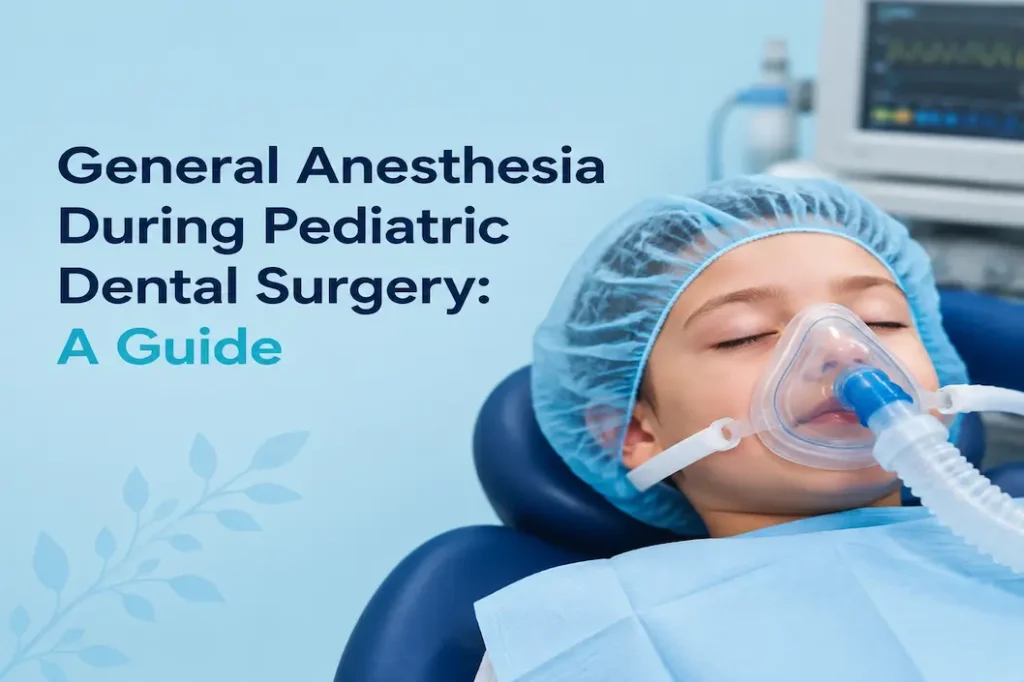
Hearing that your child may need general anesthesia for pediatric dental surgery can bring many questions. Why can’t treatment be completed while they are awake? Who keeps them safe? What will recovery look like?
General anesthesia lets a child sleep through necessary dental care while a separate qualified professional watches them closely. This guide explains why it may be recommended, how to prepare, what happens that day, and what parents should expect afterward.
What Does General Anesthesia Mean?
General anesthesia places your child in a carefully controlled sleep. Your child will not need to follow directions, remain still, or remember the dental work. The dentist can complete planned treatment without your child seeing the tools or becoming frightened midway through the visit.
This differs from laughing gas. With laughing gas, most children stay awake and can respond. General anesthesia is used when the team needs the child asleep for dental work from beginning to end.
Why Might Dental Sleep Be Needed?
A pediatric dentist may recommend full sleep when a child is too young to sit safely, has strong dental fear, needs extensive treatment, or could not complete previous visits. It may also help children with sensory, communication, developmental, or movement challenges.
A calm seven-year-old with one small cavity may manage a filling with laughing gas. A three-year-old needing several dental fillings, crowns, or an extraction may struggle through repeated awake appointments.
The goal is to complete necessary care safely, reduce distress, and avoid leaving decay or infection untreated.
Who Monitors Pediatric Dental Anesthesia?
What The Pediatric Dental Anesthesiologist Does
A pediatric dental anesthesiologist, or another qualified anesthesia professional, focuses on your child while the pediatric dentist treats the teeth. Ask for the provider’s name, qualifications, experience with children, and exact role before treatment.
How The Anesthesia Team Monitors Safety
The anesthesia professional watches breathing, oxygen level, heartbeat, blood pressure, and temperature throughout the procedure and recovery. The American Academy of Pediatrics explains that a separate qualified professional should monitor the child while the dentist provides treatment. Read the child dental anesthesia guidance.
How Should Toddlers Prepare For Dental Surgery?
Good dental surgery preparation for toddlers begins before the appointment.
Share Your Child’s Health Details
Tell the team about medicines, allergies, snoring, breathing concerns, past reactions, and recent illnesses. Call if your child develops a cough, fever, congestion, vomiting, or diarrhea. Let the anesthesia team decide whether treatment can continue.
Follow Pediatric Anesthesia Food Rules
Follow the written eating and drinking instructions exactly. Do not rely on a general “nothing after midnight” rule because timing may differ. If your child eats or drinks accidentally, tell the team honestly.
Use Calm Dental Surgery Language
Avoid frightening details or promises such as “nothing will hurt.” Try: “The dentist will fix your teeth while you take a special sleep. I’ll be nearby when you wake up.”
Bring comfortable clothes, a favorite toy or blanket, spare clothing, and any requested medicine list. New families may also find the first dental visit guide helpful.
What Happens During Pediatric Dental Surgery?
The visit begins with check-in, a health review, and confirmation of the planned dental work. Report any new symptoms and ask last-minute questions.
The team then helps your child fall asleep. Afterward, the dentist completes the approved care, which may include X-rays, fillings, stainless steel crowns, baby root canal treatment, or tooth removal.
Your child wakes in a supervised recovery area. The team checks breathing, comfort, and readiness to leave. Parent access before or during sleep varies by facility, so ask about the policy beforehand.
Which Anesthesia Side Effects Are Expected?
Parents often search “anesthesia side effects kids” because waking behavior can look unfamiliar. Common short-term effects include sleepiness, crying, confusion, dizziness, mild nausea, a sore throat, or mouth discomfort. Some children become irritable, while others sleep for much of the day.
How Can You Help With Anesthesia Recovery?
Keep your child within sight, encourage quiet rest, and offer small drinks only when allowed. Introduce soft food slowly if there is no nausea. Avoid climbing, biking, sports, or active play until your child is steady and the team allows it.
When Should You Call After Anesthesia?
Follow the written recovery instructions. Call when symptoms are stronger than expected, do not improve, or prevent drinking. Seek urgent help for trouble breathing, unusual difficulty waking, or any warning sign listed by the anesthesia provider.
Is General Anesthesia For Pediatric Dental Surgery Right?
General anesthesia is not needed for every child or cavity. Laughing gas may suit a cooperative child who needs limited care. Lighter sleep medicine may help in selected cases, but it may not keep a very young or fearful child still for longer treatment.
Ask these questions:
- Why is full sleep recommended?
- Could another option work safely?
- Which treatments are included?
- Who will give and monitor the anesthesia?
- Where will treatment and recovery happen?
A second opinion is reasonable when the plan is unclear. You can also review the practice’s sedation dentistry options before your consultation.
What Matters Before Dental Anesthesia?
General anesthesia can make needed dental care possible for a child who cannot safely manage treatment while awake. Understand why it is recommended, confirm who will monitor your child, follow preparation instructions exactly, and keep the recovery number nearby. Clear answers before treatment help parents make informed decisions.
Why Choose PCO Pediatric Dentistry & Orthodontics?
PCO Pediatric Dentistry & Orthodontics provides child-focused dental care with treatment plans built around each child’s age, comfort, health, and dental needs. Our team explains available options clearly, prepares parents for every step, and coordinates appropriate sleep dentistry when necessary to support safe, efficient, and respectful care for families throughout treatment.
What Do Parents Ask About Dental Anesthesia?
Is General Anesthesia Safe For Toddlers?
General anesthesia can be used for toddlers when necessary, but no treatment is risk-free. Safety depends on the child’s health, qualified providers, proper monitoring, and following food, drink, and illness instructions exactly.
Will My Child Remember The Dental Work?
Children under general anesthesia are fully asleep and usually do not remember the procedure. They may remember arriving or waking. Ask how sleep begins, when parents separate, and how the team supports children who feel afraid.
What If My Child Gets A Cold?
Call the dental or anesthesia team about any cough, fever, runny nose, wheezing, or congestion. Do not cancel or continue on your own. The provider will review symptoms and decide whether proceeding or rescheduling is safer.
How Long Will Anesthesia Side Effects Last?
Sleepiness, crying, dizziness, or mild nausea often improve as the medicine wears off, but recovery differs by child and procedure. Follow the written instructions and call if symptoms are severe, worsening, or lasting longer than expected.
When Can My Child Eat Or Return To School?
Offer drinks and soft foods only when the care team says it is safe. Most children need close supervision and a quiet day at home. Return to school, sports, and normal meals should follow the child-specific recovery instructions.