
When a dentist recommends helping keep your child calm, the choice can be confusing. Is laughing gas enough, or is IV sedation needed?
This guide explains laughing gas vs IV sedation in simple terms, including what each option feels like, when it is considered, and what to ask. The goal is to choose support that fits your child and the planned dental work.
Laughing Gas Vs. IV Sedation: Which Is Better?
Laughing gas provides light, short-lasting relaxation. Your child usually stays awake, responds to the dental team, and recovers quickly after the mask is removed.
IV sedation creates a deeper calming effect for longer treatment, stronger fear, or difficulty staying still. Recovery takes longer, with adult supervision afterward.
These are two common types of dental sedation for children, but neither is best for every child.
Laughing Gas Experience: What Will Your Child Feel?
Your child’s experience depends on the sedation option, with laughing gas providing light relaxation and IV sedation creating a deeper calming effect.
Laughing Gas For Kids: Calm And Awake
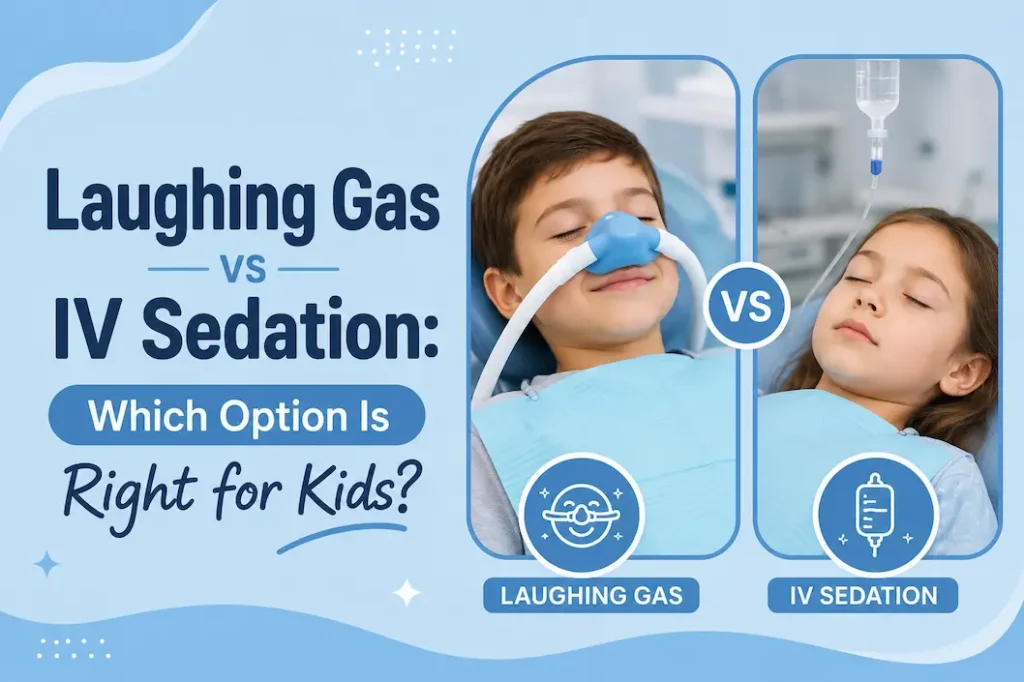
Laughing gas is delivered through a small nose mask. Many children feel warm, relaxed, light, or slightly silly, but they can usually answer simple questions.
This mild sedation for kids works best when a child can wear the mask and breathe through the nose. A blocked nose, dislike of the mask, or trouble following directions can make it less effective.
IV Sedation For Kids: Deeper Relaxation
IV sedation is given through a small tube placed in the hand or arm. It helps a child become very sleepy and less aware of the sights, sounds, and length of treatment.
Some children respond when spoken to, while others remember little. Do not promise complete sleep because the level of sleepiness can vary.
| Question | Laughing Gas | IV Sedation |
|---|---|---|
| How Is It Given? | Nose mask | Small tube in the hand or arm |
| Awareness | Usually awake | Very sleepy and less aware |
| Best Fit | Short care and mild fear | Longer care or stronger fear |
| Recovery | Usually quick | Longer rest and supervision |
| Cost | Usually lower | Usually higher |
| Ride Home | Follow office instructions | Responsible adult required |
Your child’s behavior, health, and treatment needs matter more than age alone.
Mild Sedation For Kids: When Is It Enough?
Laughing gas may be enough when a child has mild nervousness, can follow directions, and needs a short procedure. It is often considered for a small dental filling, simple care on one tooth, or help with a strong gag reflex.
For example, a child who handles checkups well but fears a filling may do well with laughing gas. A child who refuses the mask may need another plan.
IV Sedation For Children: When Is It Considered?
IV sedation may be recommended when several teeth need treatment, the visit will be long, or lighter support has failed before. It may also help children with intense fear, strong sensory reactions, or difficulty staying still safely.
A child needing several stainless steel crowns and an extraction may benefit from one planned visit instead of several stressful appointments.
Child Sedation Choice: How Does The Dentist Decide?
In conscious sedation pediatric dentistry, the dentist considers your child’s comfort, health, behavior, and treatment needs before recommending the safest option.
Child Comfort And Past Visits
The dentist reviews your child’s age, fear level, ability to follow directions, health history, medicines, and previous dental visits. Reactions to masks, needles, sounds, touch, and lying back also matter.
Dental Treatment And Visit Length
One small filling is different from treating several teeth. The dentist considers how long the work may take, how still the child must remain, and whether care can be divided into shorter visits.
Family Preparation And Recovery
IV sedation requires transportation and close supervision afterward. Ask for written instructions about eating, drinking, medicines, arrival time, and recovery.
Pediatric IV Sedation Safety: What Parents Should Know
Good pediatric IV sedation safety begins before the appointment. The team should review your child’s health, medicines, allergies, recent illness, and any past problems. Follow food and drink instructions exactly.
During treatment, trained professionals should watch your child’s breathing, heart rate, oxygen level, and response. Afterward, your child should stay until the team confirms that going home is appropriate. The American Academy of Pediatrics guidance for dental sedation explains why deeper sedation requires a qualified person focused on monitoring the child.
Laughing Gas Failure: What Happens Next?
If laughing gas does not provide enough support, the dental team should not force the child through treatment. They may pause, complete only the safest part, divide care into shorter visits, or discuss another option.
Ask about the backup plan before the appointment to reduce uncertainty.
Sedation Appointment Questions: What Should You Ask?
Before agreeing to treatment, ask:
- Why is this option recommended for my child?
- Who will give it and watch my child?
- What can my child eat or drink beforehand?
- How long should recovery take?
- What happens if the chosen option does not work?
A first pediatric dental visit can also help the dentist observe your child before recommending a plan.
Child Sedation Decision: What Is The Best Choice?
The best laughing gas vs IV sedation choice is the least intensive option that still allows safe treatment. Laughing gas may suit mild fear and short care. IV sedation may better support longer care, stronger anxiety, or unsuccessful past visits.
Ask why the option fits your child, what safety steps are used, and what recovery requires. A personalized pediatric dentistry consultation can help your family make an informed decision.
Why Choose PCO Pediatric Dentistry & Orthodontics?
PCO Pediatric Dentistry & Orthodontics provides personalized care for children with different comfort needs. Our team explains sedation choices clearly, reviews each child’s health and treatment plan, and helps parents prepare with confidence. We focus on safe, comfortable visits while supporting healthy smiles through every stage of childhood and adolescence today.
Dental Sedation FAQs
Will Laughing Gas Put My Child To Sleep?
No. Laughing gas usually keeps children awake, calm, and able to answer the dentist. It is lighter than IV sedation and wears off quickly. A child who cannot tolerate the nose mask may need another option.
Will My Child Feel The IV Being Placed?
Your child may feel a quick pinch when the small tube is placed. Ask how the team prepares children for this step. Some offices use numbing cream, distraction, or calming language based on the child’s age and fear.
Does Sedation Replace Numbing Medicine?
No. Sedation helps a child relax, while numbing medicine blocks discomfort around the tooth. A child who receives laughing gas or IV sedation may still need numbing medicine for fillings, crowns, or extractions.
Can My Child Eat Before Dental Sedation?
Follow the exact food and drink instructions from the dental team. Rules can differ by sedation type and appointment time. Eating when your child was told not to may delay or cancel treatment for safety.
How Long Will My Child Need To Recover?
Laughing gas usually wears off soon after the mask is removed. IV sedation can cause sleepiness for several hours, so plan a quiet day, arrange a ride home, and follow the office’s supervision instructions closely.