
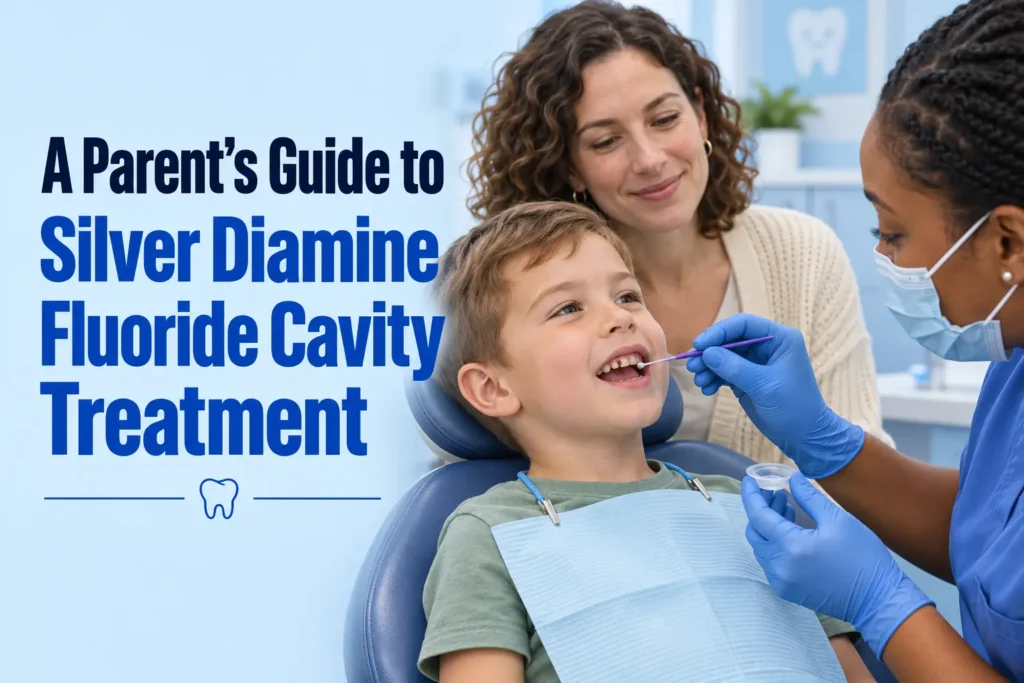
Learning that your young child has a cavity can make you worry about drilling, numbing, or a long appointment. Silver diamine fluoride for kids offers another option. This brush-on liquid can stop or slow certain cavities without drilling.
The trade-off is important: the damaged area turns dark, and the tooth may need repeat treatment or a filling later. Here is what parents should know before deciding.
What Is Silver Diamine Fluoride for Kids?
Silver diamine fluoride, or SDF, is a liquid placed directly on a cavity. It helps control the germs causing the damage and hardens the weakened area so the cavity is less likely to grow. Silver kills decay causing bacteria and Fluoride helps in remineralization of tooth enamel.
The visit is usually brief. SDF may be used on baby or adult teeth, depending on the cavity’s location and size. It is often a first step rather than a complete repair.
Is this Liquid a Cavity Filling for Baby Teeth?
Parents searching liquid cavity filling baby teeth usually want an option without drilling. SDF can meet that goal, but it is not a true filling. It does not close the hole, rebuild the tooth, or restore its shape. A filling or crown may still be needed.
Which Children Benefit From SDF?
SDF may help toddlers who cannot stay still, children who fear drilling, or children who find dental sounds and lights difficult. It can also reduce the need for several longer visits.
For example, SDF may buy time for a three-year-old with a small cavity until a filling becomes easier. It may also help a comfortable baby tooth expected to fall out soon.
A dentist experienced in children’s cavity treatment can determine whether SDF is a short-term solution or the right longer-term option for your child.
When SDF May Not Be Enough
SDF may not be suitable when a child has swelling, lasting pain, nighttime pain, a badly broken tooth, or a bump on the gum. These warning signs need prompt attention because a brush-on liquid may not control the deeper problem.
SDF Dental Treatment Pros and Cons
Understanding the sdf dental treatment pros and cons helps parents balance a simpler visit against the visible color change.
SDF Benefits For Children
SDF is quick and usually avoids drilling and numbing. It can help young or nervous children manage care. Silver diamine fluoride for kids may cost less than a filling or crown and delay more involved treatment.
SDF Limits Parents Should Know
The damaged area turns dark brown or black. SDF does not rebuild a weak tooth, and food may still collect in a large opening. Treatment may need to be repeated, and some cavities continue growing. A filling, crown, or tooth removal may eventually be necessary.
What Happens During SDF Treatment?
The dentist checks and cleans the cavity, keeps it dry, and protects nearby lips and gums. A tiny amount of SDF is brushed onto the spot and left briefly. The process takes only a few minutes.
Some children notice an unusual taste. Follow the dentist’s eating instructions, especially if another protective coating is added.
SDF does not replace regular dental checkups and cleanings. The dentist must recheck whether the cavity has hardened and stopped growing. Another application may be recommended.
SDF Tooth Discoloration: What Changes?
SDF tooth discoloration is often the biggest concern. The damaged part becomes permanently dark, while healthy tooth areas normally keep their natural color. Treating a baby tooth does not darken the adult tooth developing underneath it.
Temporary marks on the gums or lips usually fade. Ask where the dark area will show. A back-tooth stain may be hard to notice, while a front-tooth stain may show when smiling.
For additional parent-friendly details, read the American Academy of Pediatrics guide to SDF.
SDF Vs. Dental Fillings: Which Fits?
SDF can be an alternative to dental drilling for selected cavities, but it serves a different purpose from a filling.
| Question | SDF | Regular Filling |
|---|---|---|
| Drilling needed? | Usually no | Usually yes |
| Numbing needed? | Usually no | Often |
| Rebuilds the tooth? | No | Yes |
| Final appearance? | Cavity turns dark | Tooth-colored options available |
| Follow-up possible? | Yes | Yes |
A small cavity in a nervous toddler may suit SDF. A larger opening that traps food may need dental fillings for children. The right option depends on the tooth, the child’s comfort, and how long it must last.
Questions To Ask Before SDF
Ask the dentist:
- Is this cavity suitable for SDF?
- Is SDF temporary or the full plan?
- Where will the dark area appear?
- When should the tooth be checked?
- How many applications may be needed?
- What signs mean a filling or crown is needed?
- Can the dark area be covered later?
- What will each option cost?
These answers clarify today’s treatment and the likely next step.
Final Takeaway For Parents
SDF can provide a quick, drill-free way to control selected childhood cavities. However, it darkens the damaged area, does not rebuild the tooth, and may require repeat care.
Ask the dentist to show the cavity, explain the color change, and compare SDF with a filling. Keep brushing twice daily, limit frequent sugary snacks, and attend follow-ups. Preventive dental care for children remains essential because SDF cannot prevent every new cavity.
Why Choose PCO Pediatric Dentistry & Orthodontics?
PCO Pediatric Dentistry & Orthodontics provides child-focused care, clear explanations, and treatment choices built around each child’s age, comfort, and dental needs. Our team helps parents compare cavity options, understand expected results, and plan follow-up care in a welcoming setting designed for children, teens, and families throughout every stage of growth.
Silver Diamine Fluoride FAQs
Is Silver Diamine Fluoride Safe For Young Children?
SDF is widely used for children when applied by a trained dental professional. The dentist first reviews allergies, mouth sores, the tooth’s condition, and treatment needs. Temporary taste or gum marks can occur, so discuss concerns before treatment.
Does SDF Permanently Fix A Child’s Cavity?
SDF may stop or slow a suitable cavity, but it does not rebuild missing tooth structure. The tooth needs follow-up, and another application, filling, crown, or removal may be needed if it stays soft, grows, traps food, or causes pain.
Will SDF Stain My Child’s Adult Tooth?
SDF on a baby tooth darkens the damaged part of that baby tooth, not the adult tooth developing below it. Healthy nearby areas should not turn black, although temporary marks may appear on the lips or gums if touched.
How Often Does SDF Need To Be Reapplied?
Timing depends on the cavity and its response. A dentist may recheck the tooth within months and repeat SDF if the area has not hardened or remains at risk. Missing follow-up can allow growth even when the surface looks dark.
Can My Child Eat After SDF Treatment?
Instructions vary because SDF may be used alone or with another protective coating. Some children can eat soon afterward, while others must wait. Follow the directions given at the visit rather than relying on another child’s experience.