A dental visit can be difficult when a child cannot tolerate bright lights, unfamiliar sounds, face touching, or sitting still. Parents may wonder whether calming medicine is needed, whether their child will stay awake, and who will keep them safe.
Special needs dental sedation includes several levels of support, from light relaxation to fully asleep care. The right choice depends on the child, the dental work, and the setting. The goal is to use the least intensive option that allows safe, respectful, and complete treatment.
What Special Needs Dental Sedation Means
Sedation reduces fear, movement, or distress during dental care. Some children stay awake and follow simple directions. Others become very sleepy. Fully asleep dental care is a deeper option.
Sedation does not replace numbing medicine. The dentist may still numb the tooth to prevent pain. Parents considering sedation dentistry for children should ask what their child may feel, remember, and need during recovery.
Could Office Support Be Enough?
Before stronger support is used, special needs dentistry office accommodations should be matched to the child rather than applied as a fixed routine.
Helpful Office Accommodations
Options include a quiet appointment, dimmer lights, headphones, fewer people, a familiar object, or extra time. A practice visit lets the child meet the team and see safe tools without treatment.
A gentle first dental visit can reveal difficult sights, sounds, or steps. The dentist can then prepare for later dental checkups and cleanings.
Planning For A Non-verbal Child
A parent searching non-verbal child pediatric dentist needs a team that understands the child’s communication system, pain signals, calming routine, and triggers.
Bring picture cards, a communication device, or a yes-and-no signal. Explain signs of fear, tiredness, or discomfort. Caregiver knowledge is vital in dental care for disabled children who may not describe what feels wrong.
When Extra Support Becomes Safer
Sedation may help when sudden movement could make treatment unsafe, a child cannot tolerate tools near the mouth, or practice visits have not worked. It may also be considered when several teeth need care, treatment is urgent, or one planned visit would cause less distress than repeated visits.
This is not about calling a child difficult. Fear, sensory overload, limited understanding, past experiences, and uncontrolled movement can all affect care.
A small filling may be possible with light support. Several dental fillings, a baby root canal, or an extraction may require another plan.
Compare Dental Sedation Choices
| Care Path | Awake? | When It May Help | Recovery |
|---|---|---|---|
| Office Accommodations | Yes | The child can slowly adjust | No medicine recovery |
| Laughing Gas | Yes | Mild fear and mask tolerance | Usually quick |
| Stronger Calming Medicine | Often sleepy | Longer or harder treatment | More supervision |
| Fully Asleep Care | No | Extensive work or unsafe movement | Closely watched |
Laughing Gas Support
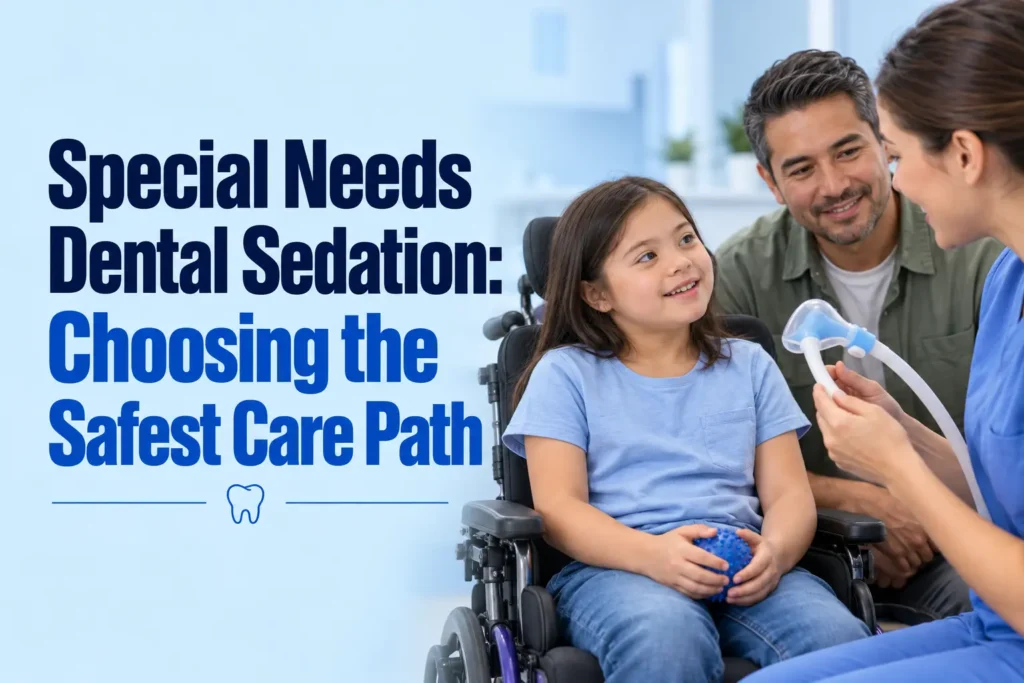
Laughing gas is breathed through a small nose mask. The child stays awake and usually feels calmer. It may not suit a child who dislikes the mask, cannot breathe through the nose, or becomes upset by face touching.
Stronger Calming Medicine
Medicine given by mouth or through a small tube in a vein can cause deeper sleepiness. Ask who gives it, who watches the child, and how long supervision is needed afterward.
Fully Asleep Dental Care
Fully asleep care may be considered when treatment is extensive or other choices cannot provide safe care. Searches for anesthesia for special needs dental treatment often reflect concern about an office, surgery center, or hospital.
The setting should fit the child’s health, treatment length, and support needs. No location is best for every child.
How Dentists Choose The Safest Path
Planning starts with the child’s health history. The dentist should review regular medicines, allergies, previous reactions, recent illness, sleep-related breathing concerns, and earlier treatment experiences.
The team also considers whether the child can follow directions, accept a mask or small sensors, remain still, and recover calmly. Treatment amount and urgency matter too.
Current American Academy of Pediatric Dentistry safety guidance stresses health review, proper monitoring, trained team members, emergency readiness, and suitable recovery before a child leaves.
Questions Parents Should Ask
Before agreeing to a plan, ask:
- Why is this level of support recommended?
- Could accommodations or a lighter option work?
- Who will give the medicine?
- Who will focus only on watching my child?
- How will breathing, oxygen, and heart rate be checked?
- How often do you treat children with similar needs?
- What happens if the planned option does not work?
- Where will treatment take place?
- Can needed care be completed in one visit?
- What costs and insurance approvals should I check?
Clear answers matter more than “we do this all the time.”
Prepare For Dental Sedation
Before The Appointment
Share all medicines, vitamins, supplements, allergies, and past reactions. Report any recent illness. Follow the office’s exact food, drink, and medicine instructions.
Tell the team what helps your child feel safe. Bring approved comfort items and simple pictures showing arrival, treatment, and going home.
After The Appointment
Have one responsible adult watch the child closely. Keep recovery quiet, follow eating and activity instructions, and keep the office’s number nearby.
Ask which changes are expected and which require an immediate call. Do not return the child to school or regular activities until the dental team approves it.
Choose The Least Intensive Safe Path
The best plan may begin with accommodations, move to light calming support, or use deeper care when needed. Choose a pediatric dentistry team that listens to your knowledge of the child, explains each option, and bases the decision on safety rather than convenience.
Why Choose PCO Pediatric Dentistry & Orthodontics?
PCO Pediatric Dentistry & Orthodontics provides child-focused dental care with thoughtful support for different comfort, communication, and sensory needs. Our team explains available options, listens to caregivers, and builds an individual visit plan. We help families understand sedation choices, preparation steps, treatment needs, and recovery guidance before moving forward with confidence.
Special Needs Dental Sedation FAQs
Is Dental Sedation Safe For A Child With Special Needs?
Dental sedation can be safe when the option fits the child’s health and treatment needs. Safety also depends on trained providers, continuous checks, emergency readiness, correct preparation, and careful recovery instructions.
Will My Child Be Awake During Dental Sedation?
It depends on the chosen level. Laughing gas and lighter sedation usually keep a child awake, while stronger medicine may cause deep sleepiness. Fully asleep dental care means the child is not awake during treatment.
What If My Child Is Nonverbal?
Share the child’s communication tools, pain signals, sensory triggers, and calming routines before treatment. A prepared dental team can use caregiver guidance, picture systems, and familiar signals to make care safer and clearer.
Is A Hospital Safer Than A Dental Office?
Neither setting is automatically safest for every child. The right location depends on health history, treatment length, sedation depth, available equipment, and who provides and watches the child throughout care.
Can Regular Medicines Affect Dental Sedation?
Yes. Prescription drugs, store-bought medicines, vitamins, and supplements can change how calming medicine works. Give the dentist a complete list and never stop, add, or change a dose unless the care team directs you.